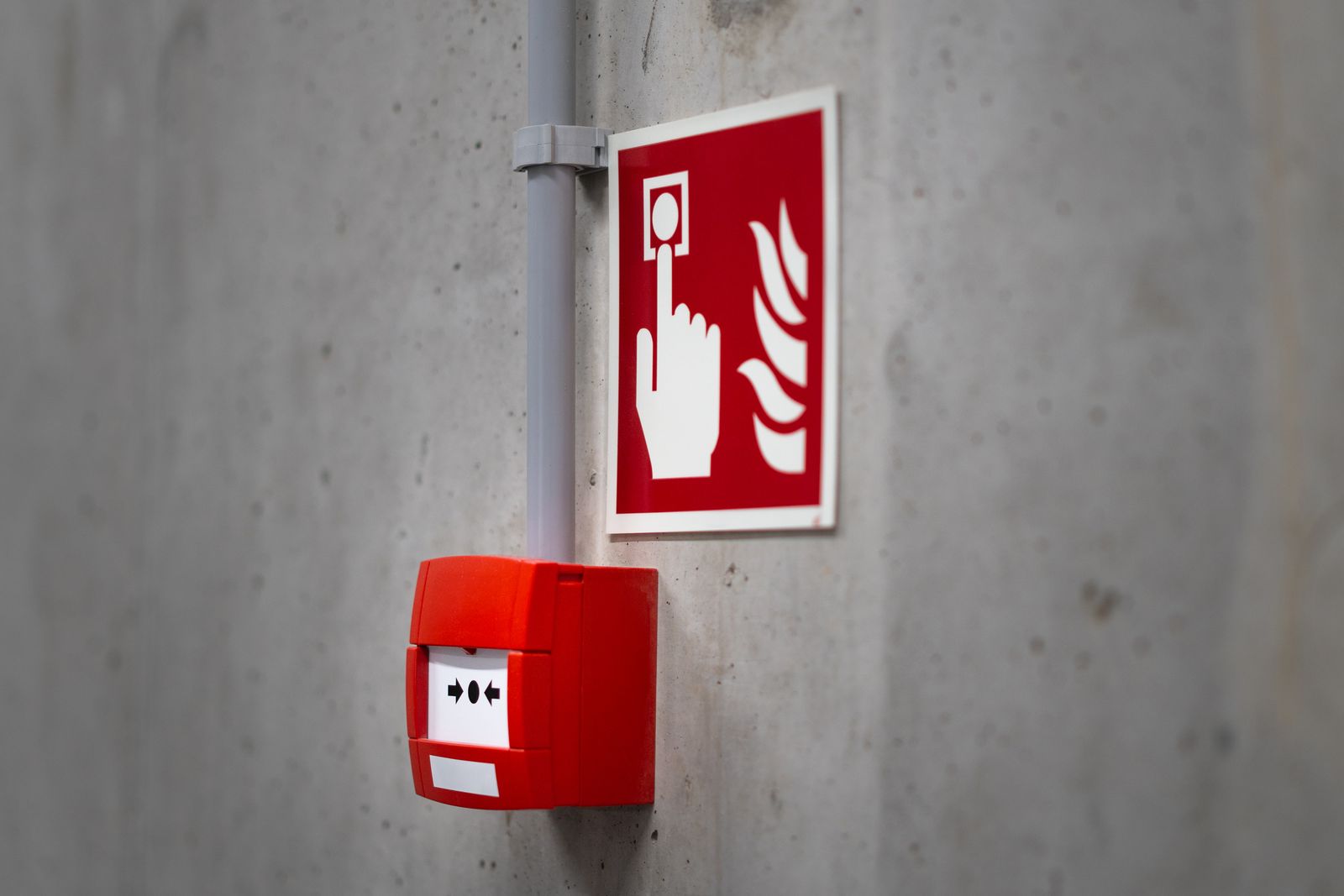
Does an Airbnb need a fire risk assessment?
A home occupied by its owner or by a tenant under a normal tenancy is a private dwelling, and the Fire Safety Order does not reach inside it. The moment you let that home to paying guests who are not family or friends, it stops being occupied as a private dwelling. The Order then applies in full, and it applies from the first night. Whether you host two weekends a year or run the property as a full-time Airbnb makes no difference to the duty.
The duty sits with the responsible person: the owner, or whoever has control of the property, which can include a co-host or a management company. You must carry out a suitable and sufficient fire risk assessment, record the significant findings, act on them, and keep the assessment under review. A listing that has never been assessed has no record to show an insurer, the council or the fire and rescue service after an incident.
The benchmark is the Home Office guide Making your small paying guest accommodation safe from fire, updated in January 2025. It is statutory guidance under Article 50 of the Order, so following it, or departing from it, can be relied on in proceedings. It is written for small, simple premises: a house of up to two storeys sleeping no more than ten guests with no more than four bedrooms on the first floor, or an individual flat. Larger or more complex properties are assessed against the HM Government Sleeping Accommodation guide instead, and we tell you which applies before we start.
What we check
- The escape route: the hall and stairs that every guest will use half asleep in the dark, the construction around them, and whether the doors opening onto them are solid and close fitting.
- Every bedroom: including any room that can only be reached through another room, which the guide does not accept as a bedroom on an upper floor.
- Final exit doors: whether the front and back doors open from the inside without a key. Smart locks and keypads must release from inside without a code or power.
- Smoke and heat alarms: what is fitted, where, whether they are interlinked, and whether they are mains powered.
- Lighting on the escape route: whether guests could find their way out if the power failed, and what the proportionate answer is for your property.
- Ignition sources: the fixed wiring and its report, the appliances you provide, the heating, the cooker and any candles or tea lights left out for guests.
- Guest information: the fire instructions on the back of the bedroom door and in the welcome pack, and whether they say what to do, where to go and what address to give the fire service.
- Management between lets: who turns the property around, what is checked at changeover, and whether anything is recorded.
We go into every room. A short-term let has no communal area to stop at, so the assessment covers the whole dwelling, and the guests who matter are the ones who arrived an hour ago and have never seen the house with the lights off.
The standard for a short-term let is proportionate, not an HMO standard
The paying guest guide is deliberately lighter than the standards applied to HMOs. We assess against what it actually asks for, which is often less than a host has been told they need, and sometimes more in one specific area: detection.
Interlinked alarms in every room a fire could start
- Smoke alarms in the hall, landing, living room and every bedroom, with a heat alarm in the kitchen, all interlinked so one alarm sounds them all
- Mains powered with battery backup (Grade D1 to BS 5839-6). Sealed long-life battery alarms are accepted as a short-term measure while mains alarms are arranged
- Bedroom coverage is the one place this guide asks for more than a normal rental, because guests are unfamiliar and asleep
Solid doors, a clear route and exits that open without a key
- The hall and stairs should hold back fire for a notional 30 minutes. Sound conventional construction is normally enough
- Doors onto the route should be solid and well fitting. Self-closers, intumescent strips and smoke seals are not treated as essential in this guide
- Final exits open from the inside without a key, a code or power
Often simpler than you expect
- Where street lighting does not light the route, a rechargeable torch in each bedroom with a sign, or plug-in night lights on the stairs, can be the proportionate answer in a small property
- Fire exit signs are not normally needed where the way out is obvious
- A small extinguisher or fire blanket in the kitchen is optional under this guide. Guests are expected to leave, not fight the fire
Written guest information and checks at changeover
- Fire instructions on the back of each bedroom door and in the welcome pack: how to raise the alarm, the way out, and the full address and postcode for a 999 call
- Alarms tested and exits checked at each changeover, with a simple log kept
- A carbon monoxide alarm wherever there is a gas or solid fuel appliance
Where your property falls outside the small premises scope, for example an open-plan ground floor on a two-storey house, a bedroom reached only through another room upstairs, or more than ten guests, the standard steps up and we assess against the Sleeping Accommodation guide. We explain which guide applies and why in the report.
What you get, and what happens next
You receive a written fire risk assessment covering the whole property, with the significant findings, a risk rating and a prioritised action plan. Each action states where the problem is, what is wrong, what is needed to put it right and what finished looks like, so you can hand it to any tradesperson without the rest of the report.
We write to the proportionate standard. If a previous assessor has told you every internal door needs replacing with a fire door, self-closers and seals, we will tell you plainly whether the guide actually asks for that in your property. In a small short-term let it usually does not.
Where the action plan calls for works we can carry out, such as upgrading the alarms to an interlinked mains system or adding a heat alarm in the kitchen, we quote separately. The fee for the assessment is fixed and does not change with the number of findings, and you are free to use any contractor.
If we find an immediate and serious risk to life, such as a final exit that cannot be opened from inside, we tell you on the day and advise on the urgent action needed. We do not sit on a serious finding until the report lands.
Registered assessors, and one firm to the finish
We assess short-term lets as a core part of our fire risk assessment work, so we know the paying guest guide in detail, including the places where it is lighter than HMO guidance and the one place where it is stricter.
- NFRAR: National Fire Risk Assessors Register.
- IFSM: Associate member of the Institute of Fire Safety Managers.
- Qualified electricians in-house: for the alarm, lighting and electrical works that follow.
- Fixed fee: the assessment costs the same however many findings there are, and you are free to use any contractor.
Fire risk assessments for other property types
Each type of property is assessed against its own benchmark. Pick the one that matches yours, or start from the main fire risk assessment page.
Fire risk assessment for Airbnb and short-term lets: your questions
Yes, if you let it to paying guests. The Regulatory Reform (Fire Safety) Order 2005 applies to premises let to paying guests even for one night, because they are no longer occupied as a private dwelling. The responsible person must carry out and record a suitable and sufficient fire risk assessment. This applies to a spare room let while you are at home as well as to a whole property.
Trusted by landlords and operators across Greater Manchester.
Fire Sure Compliance helped us with fire alarm testing at a property in Manchester. They were professional, punctual, and explained everything clearly. Great local company and I would definitely recommend.
Reliable, friendly service. Very knowledgeable in their field & competitive pricing structure. Great communication throughout every job, a pleasure to work with.
Fire Sure Compliance carried out PAT testing for us locally and the service was excellent. Clear communication, turned up on time, and everything was explained properly. Would happily use again.